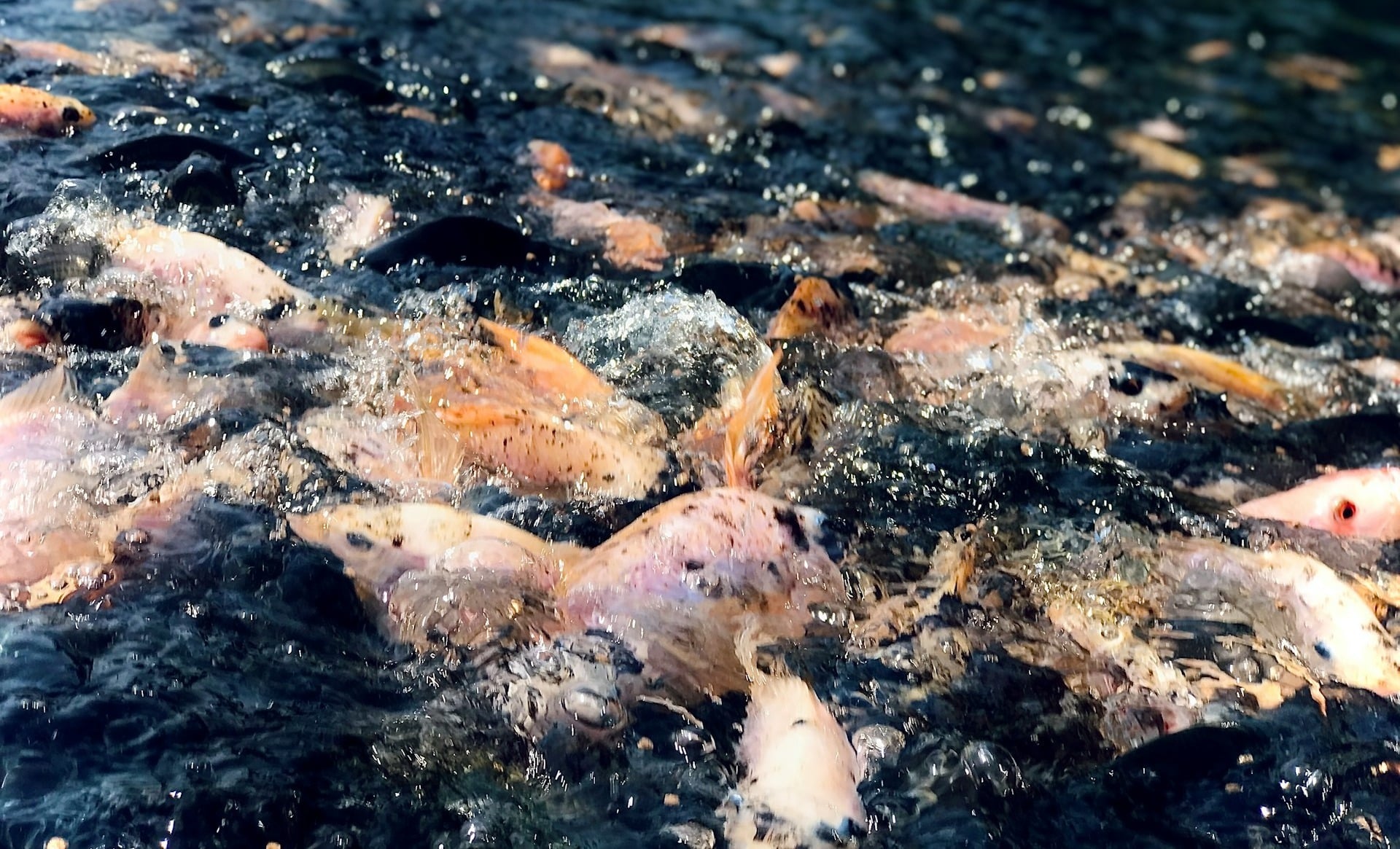
Photo by Creab ThePolymath on Unsplash
Researchers found the relatively new aquaculture method, recirculating aquaculture systems, can advance environmentally sustainable food production while proving technically feasible.
In May 2024, researchers published a study in Bioresource Technology exploring the environmental sustainability of aquaculture wastewater treatment methods.
Scientists from Purdue University in Indiana, US, conducted a life cycle assessment to understand the environmental sustainability of using microalgae to treat wastewater in shrimp recirculating aquaculture systems (RAS).
Developing zero-waste aquaculture systems
With the industry's priority to utilise ecological aquaculture practices, the researchers explored the practicality of treating aquaculture wastewater to progress environmentally sustainable food production.
Although high in demand, the industry is conscious that these sustainability credentials are balanced with the methods’ practical effectiveness to ensure zero-waste food production is both technically feasible and environmentally sustainable. The study’s researchers confirm it is possible to use aquaculture wastewater treatment methods to achieve zero-waste food production and meet both practical and environmental requirements.
The research is joined by three other studies led by Halis Simsek, an assistant agricultural and biological engineering professor. Their study on algae and bacteria, published in June 2024 in Environmental Research, supports resource recovery in aquaculture. Detailing their findings, they state that treating large-scale shrimp facilities’ wastewater can provide aquaculture benefits.
The scientists from Purdue University and institutions in Egypt, India, and Turkey used a $10 million grant from the US Department of Agriculture’s (USDA) National Institute of Food and Agriculture. Designed to grow Midwestern seafood production and consumption, USDA research is focusing on developing zero-waste aquaculture systems. Their efforts have seen them engage in the controlled growth of aquatic organisms and aquaponics systems, which combine aquaculture and plant cultivation in nutrient-enriched water.
Aquaculture’s role in securing sufficient food production
Issues including increasing population numbers, economic progress and climate change exert significant pressure on global, largely arable land. As most of the world’s food is grown on land, adopting alternative production methods is vital to conserving natural resources and ensuring a steady food supply to meet rising demand.
Aquaculture, a form of controlled environment agriculture (CEA), involves raising, feeding and breeding aquatic organisms under controlled conditions to produce food. Various systems are available to producers in the aquaculture space, including ponds, raceways, and RAS. This latter type of system traditionally consists of an indoor farming system. Using a biofilter in a closed loop, it features water reuse, self-cleaning and cultivation of a high-density nature.
Sustainable development is a necessity in today’s global aquaculture industry. However, wastewater treatment remains a significant challenge due to fish production, energy utilisation potential, and water usage factors. Technological advancements and innovative modifications to existing methods prove a feasible aquaculture solution and serve as an environmentally friendly bridge between water, food and energy.
Addressing global food scarcity is a priority in the aquaculture industry. The fish share for human consumption from aquaculture is expected to increase to 58% in 2028, up 6% from 52% (average for the period 2016–2018).
Recirculation systems in aquaculture are more effective in managing the volume of wastewater, research finds, as only 10% of the total volume of water is replaced daily, proving a sustainable method.
Interested in discovering more research on fisheries science, aquaculture and related topics? Explore our in-depth look at the FSTA coverage of fisheries science research to find an overview of relevant research areas, key journals and a sample FSTA record.
Wastewater harms the environment
However, while aquaculture methods provide an effective way to feed the globe’s growing population, they produce wastewater that can create environmental damage. “Those wastewaters are not good for the environment because they discharge a large amount of nutrients like nitrogen and phosphorus,” said Jen-Yi Huang, one of the study’s researchers and associate professor of food science.
Researchers are working to learn how aquaculture practices can evolve to help provide global food systems with sufficient produce and protect the environment by reducing their harmful effects.
“We want to fully recover the nutrients from the wastewater using microalgae,” Huang said. The study’s researchers strive to ensure that food production creates zero waste, is environmentally sustainable and is technically feasible. For environmental sustainability, researchers are working to develop a production system that minimises environmental impact.
“There is a tradeoff because operating the microalgae wastewater treatment still requires some energy input,” Huang said. “The LCA evaluated the tradeoff between the nutrient recovery and additional energy input for the algal wastewater treatment,” Huang added.
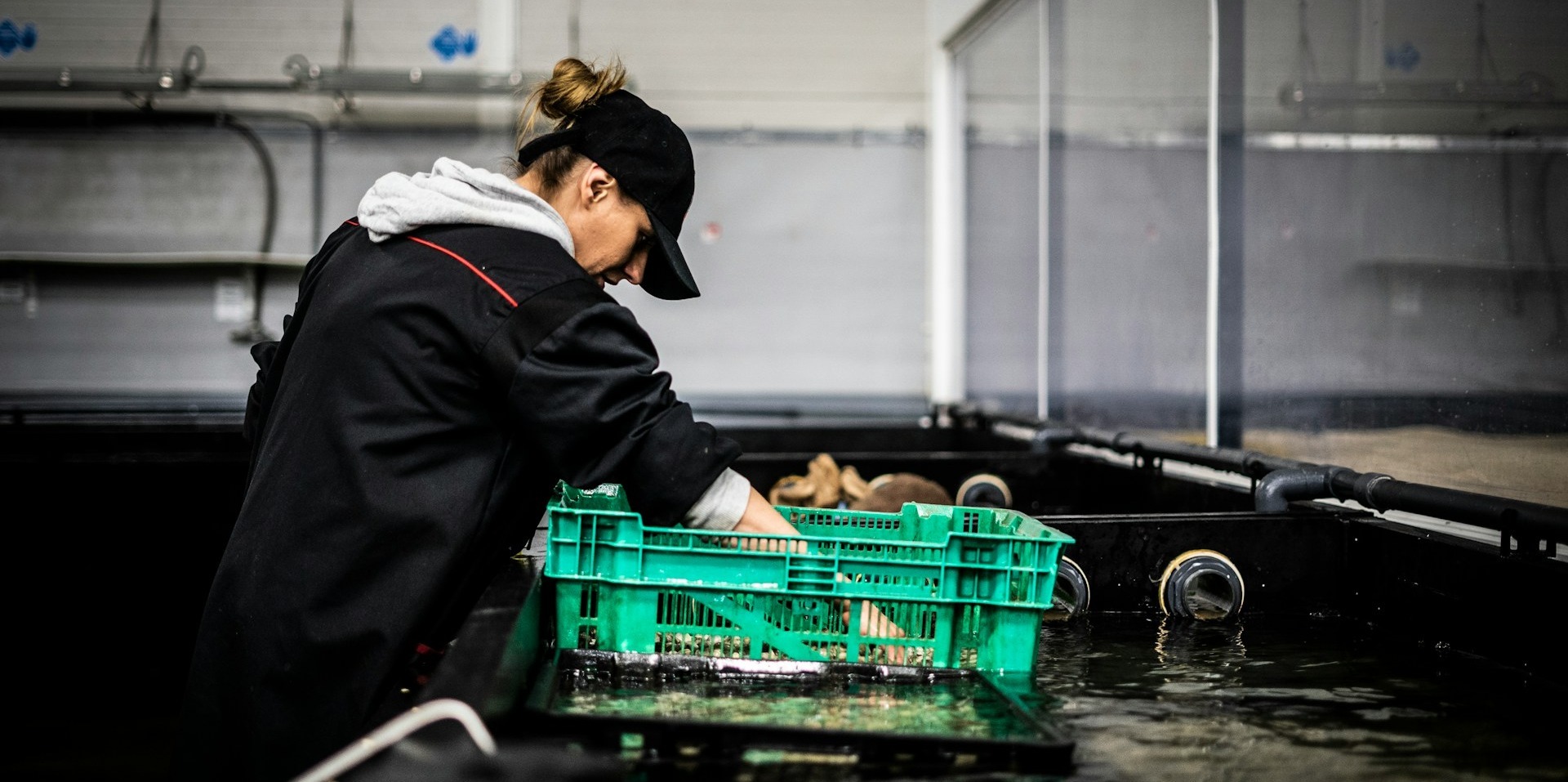
Photo by Paul Einerhand on Unsplash
Microalgae progresses wastewater treatment
“We want to use microalgae as a wastewater treatment approach. We grow algae in the aquaculture wastewater,” said Huang, who headed up the study analysing microbial use of nutrients as a biological wastewater treatment method.
A new method for treating aquaculture wastewater involves creating RAS with microalgae. Known as phycoremediation, this method uses microalgae to absorb nitrogen, phosphorus, and solid waste through photosynthesis.
Microalgae photosynthesis can capture carbon dioxide, demonstrating its potential to lower greenhouse gas emissions, 2022 research indicates. Microalgae can also absorb nutrients to produce biomass, which can then be transformed into bioenergy and other bioproducts. Due to the extensive algal strains and difficulty in identifying effective types, microalgae is an underutilised resource in treating aquaculture wastewater.
However, microalgae cultivators need considerable resources, energy, and operational costs to ensure effective development. As a result, these present scalability obstacles for producers seeking to expand their aquaculture practices beyond small labs.
The study, which involved a life cycle assessment (LCA), examined the environmental impact of incorporating microalgae-based wastewater treatment into a shrimp farm with RAS. The LCA explored shrimp production’s environmental impact when analysing feed production use in wastewater treatment for a commercial farm in Indiana, US.
The microalgae treatment accounted for less than 10% of the system’s total environmental impact, which included freshwater eutrophication potential, marine eutrophication potential and global warming potential. Electricity use was the main contributing factor.
Applying microalgae treatment was effective in lowering the system’s freshwater and marine eutrophication potential but not global warming potential. However, switching coal for renewables in the electricity supply decreased the total environmental impact of aquaculture methods by 90-99%. The researchers discovered that using algal biomass in biogas production reduced the system’s marine eutrophication potential. However, developing feed ingredients and biodiesel did not positively affect the environment.
As part of the study, the researchers compared microalgae with the traditional activated sludge treatment used in aquaculture and compared the environmental impacts of various ways to use algal biomass. They found using microalgae for wastewater treatment is both environmentally feasible and more effective than the traditional activated-sludge method, even when considering energy requirements. Utilising these findings and their presence in aquaculture could enhance the sustainability of RAS.
Furthermore, it could progress the development and result in the emergence of large-scale microalgae treatment facilities. “The result of this paper provides the proof of concept on an experimental scale,” Huang said.
“Using the microalgae as the wastewater treatment method can indeed improve the environmental performance of aquaculture production,” Huang said.
Previous research studies, in 2020 and 2021, however, found that RAS models were not profitable when all costs were accounted for. The researchers found that substantial increases in yields (above those present in the study) were necessary to produce more efficient energy, water, capital and labour resource use to lower costs to a profitable level.
Global developments in recirculating aquaculture systems
The NAPRAS fish farming wastewater treatment project aims to pioneer new developments in RAS. The companies involved in the project—Alumichem, DTU Aqua, Clean Matter and Drying Matter—will engage in efforts designed to efficiently remove nitrogen and phosphorous to significantly lower emissions. The collaboration centres around tackling environmental discharge limits in RAS.
Pure Salmon Group’s Japanese land-based salmon farming project, Soul of Japan, secured JPY 33 billion (€194 million) in financing to develop its facility. As it aims to be Asia's largest land-based salmon farm, the company’s facility is anticipated to produce 10,000 metric tonnes of salmon annually.
Coordinated by the University of Copenhagen, the EU-funded RASOPTA project developed a non-invasive, DNA-based tool that detects bacteria, parasites and viruses from water samples, which can reduce disease and antibiotic use. They also identified the microbial compounds behind fish's musty off-flavour, helping farmers produce cleaner, healthier, better-tasting fish. The project aims to remove key barriers limiting the wider uptake of RAS.
Alongside commercial investment, universities and research consortia are developing tools to address RAS’s environmental, health and operational challenges. To help train the next generation of aquaculture researchers, the University of Stirling is opening the National Aquaculture Technology and Innovation Hub (NATIH), a facility equipped with 17 separate recirculating aquaculture systems. Designed to position the UK as a global leader in sustainable aquatic food production, it aims to boost productivity, create skilled blue-economy jobs, and support global food security.
New aquaculture-focused research centres and labs continue to open worldwide, from Deakin University's AquaFI Lab and the University of Hawaiʻi at Mānoa's Tuahine Aquaculture Research and Education Center (TAREC) to the University of Maine's upcoming Sustainable Aquaculture Workforce Innovation Center (SAWIC)—clear signs that interest and investment in this field show no sign of slowing.
Together, these developments show how RAS research is moving beyond water reuse alone. From microalgae-based wastewater treatment and nutrient recovery to improved monitoring, disease prevention and dedicated research facilities, innovation is helping make aquaculture more resource-efficient and resilient. Significant challenges remain, such as energy use, scalability and profitability, but continued investment in research and collaboration between universities, industry and policymakers could help RAS contribute more sustainably to future food production.
Read more:
> Climate Change and Water Resources: Navigating Towards a Sustainable Future
> Balancing People and Planet: Turning the COP30 Declaration into Action Through Food Science
> Advancements in Food Waste Research: Sustainable Solutions and Future Directions
Editorial notes
Original article written in May 2024 by Natasha Spencer, with additions made for publication in November 2026 by Hannah Casbolt