Welcome to the October edition of the IFIS newsletter, published on World Food Day! This month, we’re celebrating the 2026 theme, Innovate today. Nourish tomorrow, with highlights of new tips, resources, and research exploring how we can build healthier, more resilient food systems for the future.
Let's dive into the latest news you won't want to miss >>>

Diverse crops can support resilient food systems; and diverse research can support better solutions for food and health. This World Food Day, we’re highlighting bibliodiversity: the importance of ensuring that scholarly knowledge reflects a wide range of voices, perspectives, and sources.
FSTA reflects this commitment to diverse discovery. Our specialist food science and nutrition database brings together research from sources across 91 countries and in more than 40 languages, with more than 200,000 records added in 2025 alone. This breadth helps surface a wider range of evidence, perspectives, and research traditions—supporting more inclusive scientific discovery across the food, health, and nutrition sciences.
Claim your free trial access to FSTA to find the latest evidence on crop diversity, building sustainable food systems, and much more.

Generative AI can help you explore a topic, brainstorm search terms, or refine your writing, but it can also create hallucinated citations: references that look credible but don't really exist.
Don't rely on AI tools, such as ChatGPT, for your literature searching. And always verify every source in a trusted database before using it in your work: checking the authors, title, journal, year, and DOI.
Watch our new video, AI, Academic Research and Hallucinated Citations, to see a real example of an AI-generated fake reference and learn practical steps for checking citations.
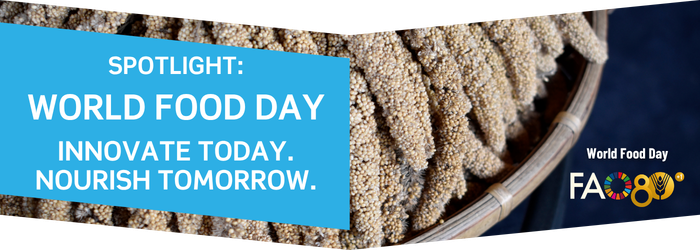
Today is World Food Day, with this year’s theme, “Innovate today. Nourish tomorrow.” It is a timely reminder that innovative approaches to how we grow and share food can help build healthier, more resilient food systems for the future.
Our new blog post asks whether greater crop diversity could be part of the answer, exploring how diversifying crops may support food security, nutrition, and sustainability. Here are three research articles that caught our eye:
> Nutritional, textural and sensory properties of bread from wheat, millet and sorghum based composite flour
Aneeq Ahmad et al., Italian Journal of Food Science, Volume 37, Issue 4
Beyza Ciftci et al., PLoS ONE, Volume 26, Issue 6
Marc Bertrand Dandji Saah et al., LWT -- Food Science and Technology, Volume 237
Claim a free trial of FSTA now to continue exploring this topic.

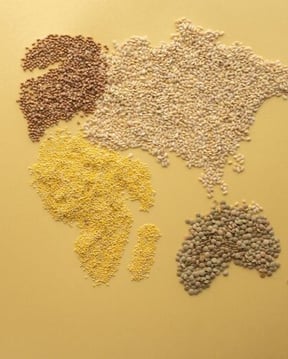 |
Could Greater Crop Diversity Help Nourish Tomorrow?
From fonio and Bambara groundnut to millet and teff, underutilised crops could help diversify diets and food systems. But unlocking their potential depends not only on biodiversity, but also on how well scientific knowledge travels. Read more
|

FSTA helps you discover emerging research quickly, adding new entries weekly. In September, over 23,000 new records were added, curated from 578 different sources, including 169 publishers based in 43 countries.
Learn more about the newest additions, screened by the FSTA science team for quality, integrity, and relevance.