Welcome to the November edition of the IFIS newsletter! Each month, you'll find our highlights of new features, tips, resources, and much more.
Let's dive into the latest news you won't want to miss >>>

Open access has made nearly two million publications immediately free through gold open access in 2025 alone. But is it changing who holds power in scholarly communication, or simply changing who pays?
In Who Really Benefits From Open Knowledge?, we examine how access, publishing costs, visibility, and influence shape the research landscape. The report asks a vital question: does making an article free to read make the system equitable?
Published for International Open Access Week, this piece explores who can afford to publish, whose research gains visibility, and which knowledge ultimately drives scientific progress.
Read the full report and download your copy: Who Really Benefits From Open Knowledge?
Don’t confuse published with proven. Publication is an important step, but critical appraisal asks the next question: how strong is the evidence?
Thorough critical appraisal allows you to systematically examine a study’s design, methodology, data collection and analysis to assess its quality, validity and relevance.
Get more information and the full critical appraisal checklist
World Antimicrobial Resistance Awareness Week begins on 18th November. As the WHO explains, it is the "shared responsibility of governments, health professionals, veterinarians, environmental experts, farmers, researchers and communities to prevent AMR [Antimicrobial Resistance]."
With that in mind, here are three recent articles which have caught our eye, highlighting the different ways that AMR can impact the food chain:
Daniel N. Miller and Lisa M. Durso, Applied and Environmental Microbiology, Volume 92, Issue 9
Alejandro Huerta-Saquero et al., PLoS ONE, Volume 20, Issue 10
Malek Gharbi et al., Molecules, Volume 31, Issue 16
Claim a free trial of Ovid NutriHealth now to continue exploring this topic.

 |
Open Access Week 2026: Who Really Benefits From Open Knowledge?
As scientific publishing becomes more open, are we also changing who holds the power to publish, be discovered, and shape the direction of research? Read more
|
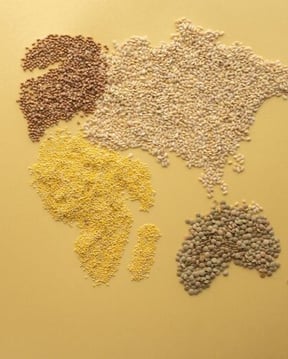 |
Could Greater Crop Diversity Help Nourish Tomorrow?
From fonio and Bambara groundnut to millet and teff, underutilised crops could help diversify diets and food systems. But unlocking their potential depends not only on biodiversity, but also on how well scientific knowledge travels. Read more
|

FSTA helps you discover emerging research quickly, adding new entries weekly. In October, almost 20,000 new records were added, curated from 638 different sources, including 187 publishers based in 43 countries.
Learn more about the newest additions, screened by the FSTA science team for quality, integrity, and relevance.